
New tax payment rules are on the horizon, and they could change how small businesses, company directors and self-employed professionals manage their finances. Here's what you need to know.
For many UK business owners, managing tax payments is already one of the more challenging parts of running a business.
Between VAT returns, PAYE, Self Assessment and everyday operating costs, keeping enough money available to meet HMRC deadlines requires careful planning.
Now, following the Autumn Budget 2026, the government has confirmed significant changes to how certain taxes will be collected.
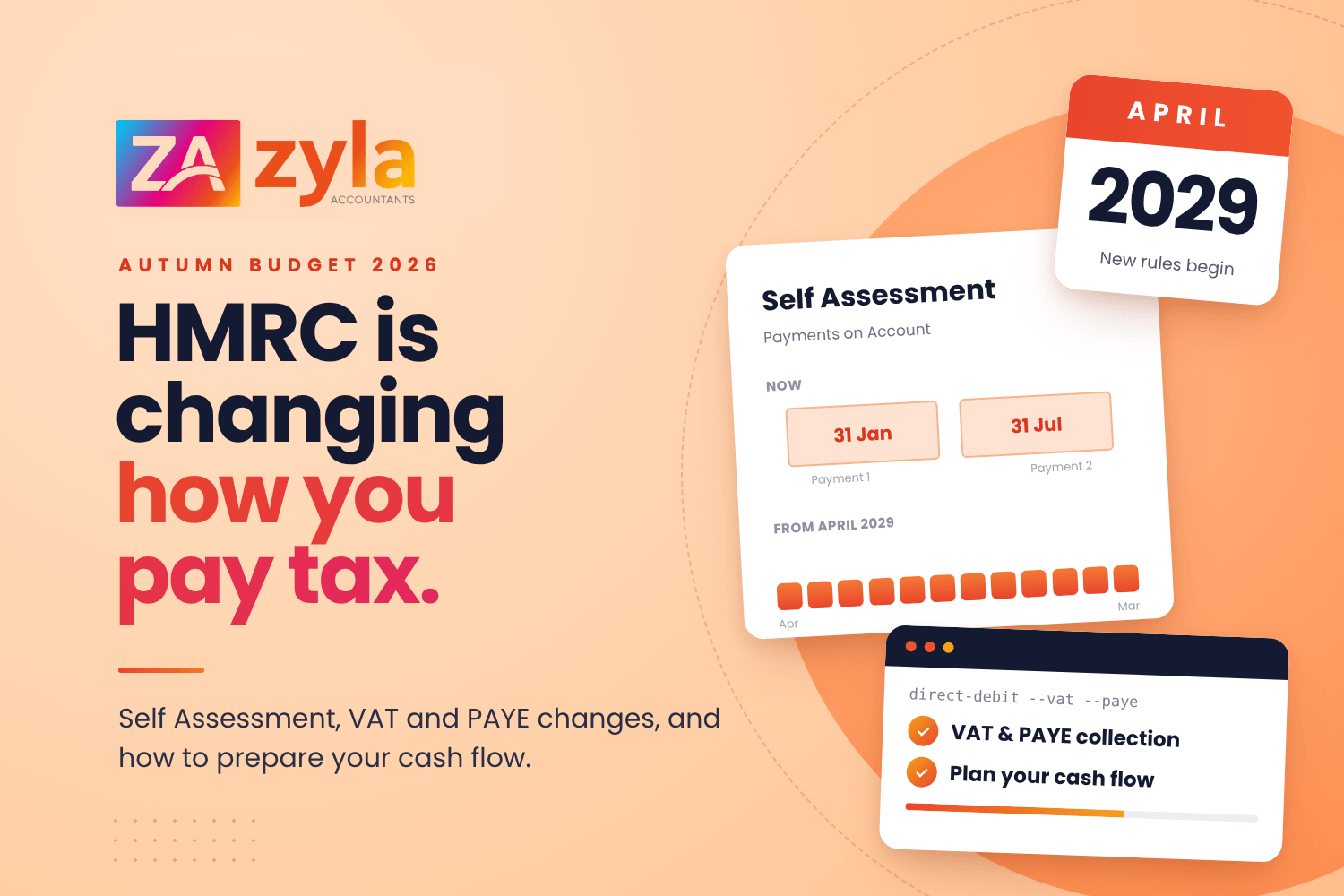
From April 2029, more frequent Self Assessment payments and new Direct Debit requirements for VAT and PAYE will bring tax collection closer to when businesses and individuals earn their income.
While these reforms are intended to make tax payments more manageable and reduce unpaid tax, they could also create new cash-flow challenges for businesses that aren't prepared.
At Zyla Accountants, we believe understanding these changes early is the best way to avoid financial surprises later.
1. Self Assessment Tax Payments Are Changing
One of the biggest announcements concerns the way millions of taxpayers make Payments on Account.
Currently, many self-employed individuals, landlords and other taxpayers make two advance payments towards their annual Self Assessment tax bill.
These are normally due on:
31 January – the first Payment on Account.
31 July – the second Payment on Account.
A balancing payment may also be due the following January.
However, from April 2029, HMRC plans to replace this approach with smaller, more regular payments made throughout the tax year for taxpayers who are required to make Payments on Account.
The government has not yet confirmed exactly how frequently these payments will be collected.
The aim is to reduce the gap between earning income and paying the tax owed.
What could this mean for your business?
Imagine you're a self-employed consultant who currently sets aside money throughout the year before making two larger tax payments.
Under the new arrangements, payments could leave your account more regularly.
This may make budgeting easier for some people, but businesses with seasonal income or unpredictable cash flow may need to adjust their financial planning.
Importantly, the changes are about when you pay your tax, not how much tax you owe.
And for taxpayers already making Payments on Account, the transition period in 2029–30 could require particularly careful planning.
2. VAT and PAYE: New Direct Debit Requirements
Another significant change affects businesses registered for VAT and employers operating PAYE.
From April 2029, businesses will generally be required to have a Direct Debit instruction in place for VAT and PAYE return liabilities, unless an exemption applies.
However, this doesn't mean businesses will lose the ability to make payments themselves.
Under the announced arrangements, businesses will still be able to pay HMRC using their preferred payment method before the specified cut-off date.
If a liability remains unpaid, HMRC will be able to collect the outstanding balance automatically through Direct Debit.
Why does this matter?
Consider a business that has several major expenses falling due around the same time:
Employee wages and payroll costs.
Supplier invoices.
Commercial rent.
VAT or PAYE liabilities.
If the business hasn't properly planned for its tax obligations, an automatic collection could place additional pressure on available cash.
The new system may help prevent missed deadlines and unnecessary penalties, but it also makes accurate financial forecasting increasingly important.
The lesson for businesses is simple: money collected for VAT or deducted through PAYE should never be mistaken for money available to spend.
3. HMRC Is Increasing Its Focus on Unpaid Tax
The changes don't stop at payment schedules.
The government has also announced additional investment in HMRC's compliance and debt recovery capabilities.
This includes plans to recruit another 670 compliance officers by 2029–30, alongside previously announced recruitment commitments.
From July 2029, HMRC also intends to introduce powers to recover certain lower-value tax debts through regular instalments directly from bank accounts.
These proposed powers are aimed at individuals and companies that can afford to pay but repeatedly fail to settle their tax debts.
Safeguards and further legislative details are still to be developed.
What should business owners take from this?
Good financial records and proactive communication with HMRC are becoming increasingly important.
For businesses already struggling with overdue liabilities, waiting until a problem escalates is rarely the best approach.
Understanding what you owe, when it is due and how it affects your cash flow can help you make informed decisions before financial pressure builds.
4. Why Cash-Flow Forecasting Is Becoming Essential
Perhaps the biggest takeaway from these announcements isn't about tax administration at all.
It's about cash flow.
A business can be profitable on paper and still experience serious financial difficulties if money isn't available when payments fall due.
With HMRC moving towards more regular and automated tax collection, having an accurate picture of your finances will become even more valuable.
That means knowing:
How much VAT and tax you are likely to owe.
When those liabilities will become payable.
Whether sufficient funds will be available.
How seasonal income affects your finances.
Whether upcoming costs could create a cash-flow shortfall.
For growing businesses, this is where professional bookkeeping and financial forecasting can make a substantial difference.
Rather than discovering a problem when a tax payment becomes due, you can identify potential shortfalls in advance and take appropriate action.
5. Five Things UK Businesses Can Do Now
Although the main reforms aren't due until 2029, there's no reason to wait before improving your financial processes.
1. Review your existing tax payment arrangements
Understand which taxes your business pays, how frequently they are due and whether the announced changes are likely to affect you.
2. Keep your bookkeeping up to date
Accurate bookkeeping helps you understand your financial position and anticipate future liabilities.
3. Set aside money for tax
Consider maintaining a separate tax reserve so that funds intended for HMRC aren't accidentally used for everyday business expenditure.
4. Prepare a cash-flow forecast
A rolling forecast can help identify periods when expenses, tax liabilities and incoming payments may create financial pressure.
5. Speak to your accountant before problems develop
Professional advice can help you understand your obligations, review your financial systems and plan for upcoming changes.
6. How Zyla Accountants Can Help
Tax changes shouldn't leave you wondering whether your business will have enough money to meet its commitments.
At Zyla Accountants, we help UK businesses take control of their finances with practical, straightforward accounting support.
Whether you're a sole trader, a growing limited company or an established business, we can help you prepare for changing requirements while improving your day-to-day financial management.
Our services include:
Bookkeeping
Keeping your financial records accurate, organised and up to date so you always have a clearer picture of your business.
VAT Returns
Helping you manage VAT obligations, prepare accurate returns and understand upcoming liabilities.
Payroll and PAYE
Supporting your payroll processes and helping ensure your PAYE obligations are managed correctly.
Year-End Accounts and Tax Support
Helping you meet reporting obligations while identifying opportunities for more effective tax planning.
Virtual Finance Director Services
Providing financial insight, budgeting and cash-flow forecasting to help you make confident business decisions.
Don't Wait Until Your Next Tax Bill Becomes a Problem
HMRC's proposed reforms represent an important shift in how tax payments will be managed in the UK.
While the changes are designed to make payments more timely and reduce tax debt, businesses will still need to plan carefully.
The good news is that with accurate records, reliable forecasting and the right accounting support, preparing for these changes doesn't need to be complicated.
Is your business financially prepared for the way HMRC is changing tax collection?
Speak to the team at Zyla Accountants about your bookkeeping, tax obligations and cash-flow planning.
Contact Zyla Accountants today and take greater control of your business finances.
This article reflects UK government announcements published in October 2026. Some reforms remain subject to further implementation details or legislation. The information is general guidance and should not be treated as personalised tax advice.